
How Turkish Furniture Is Made: Frames, Foam, Springs and Fabric
An upholstered Turkish sofa or bed is built in layers: a frame, a suspension or base, foam and padding, then the fabric. The frame and the seat foam decide how long it keeps its shape; the fabric decides how it looks and wears. Here is each layer.

Key takeaways
- Four layers: frame, suspension or base, foam and padding, then fabric.
- The frame carries the load; solid wood and good plywood are strongest where joints take weight.
- Foam density (kg/m³) tells you how long the seat keeps its shape; firmness is a different thing.
- High-resilience (HR) foam recovers quickly and resists dips.
- Ask the store for the frame material, the foam type and density, and the fabric rub test result.
What is an upholstered sofa made of?
An upholstered sofa, Turkish or not, is built in four layers. From the inside out:
- The frame: the skeleton that carries the weight, made of solid wood, plywood, engineered board such as MDF, metal, or a mix.
- The suspension: springs or elastic webbing stretched across the seat, which give it bounce and spread the load.
- The foam and padding: seat cushions, back cushions and padding over the arms and frame, often wrapped in a layer of fibre.
- The fabric: the cover you see and touch, plus details such as tufting, piping, trim and legs.
The frame and the seat foam decide how long the sofa keeps its shape. The fabric decides how it looks and how it wears day to day.
What should the frame be made of?
Most furniture made today mixes materials, and Turkish furniture is no different. What matters is where each material is used:
- Solid wood and good plywood are strongest where screws and joints carry load, such as the seat rails of a sofa and the side rails of a bed.
- Engineered board such as MDF or particleboard is fine for panels that carry little load, such as the back panels of a headboard or the base of a storage drawer.
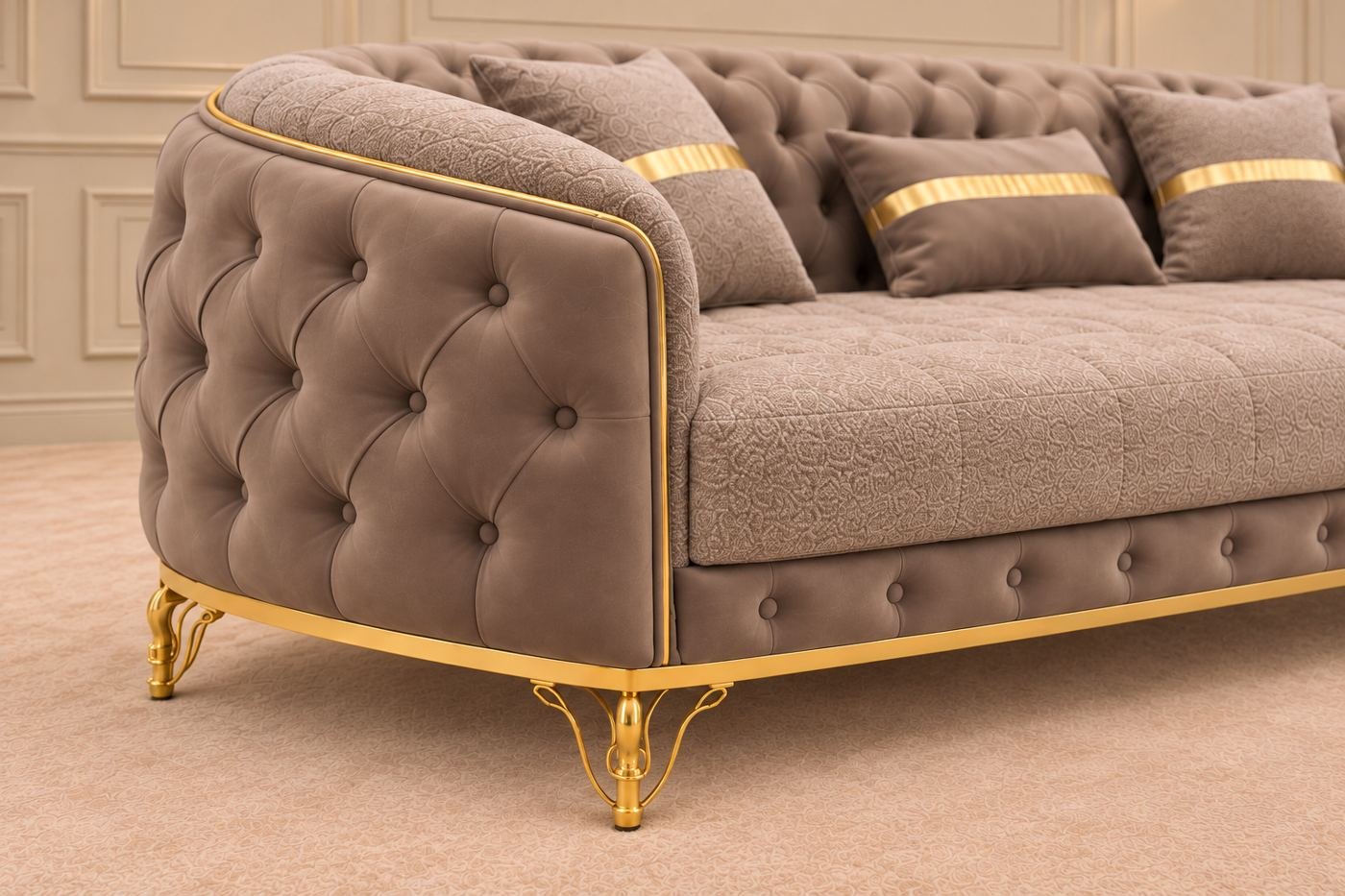
- Metal is common in legs, trim and mechanisms, such as the gold-finish legs on our sofas.
You cannot see the frame under the fabric, so test it: lift one front corner of a sofa, and the other front leg should rise too. A frame that twists, wobbles or creaks is a warning sign.
What holds up the seat?
Under the seat cushions, most sofas use one of three systems:
- Sinuous springs: S-shaped steel springs running front to back. Common, durable and supportive.
- Elastic webbing: strong bands woven across the frame. Light and comfortable; quality varies with the webbing.
- Pocket springs: individual springs in fabric pockets, sometimes inside the seat cushion for extra bounce.
What does foam density mean?
Foam density is the weight of foam per cubic metre, given in kg/m³ (or lb/ft³; 1 lb/ft³ is about 16 kg/m³). Higher density generally means the foam keeps its shape longer. Density is not firmness: a dense foam can feel soft, and a firm foam can be low density.
| Density | In lb/ft³ | What it usually means |
|---|---|---|
| Below about 25 kg/m³ | Below about 1.6 | Light foam, common in backs, arms and budget seats; softens sooner |
| About 25–35 kg/m³ | About 1.6–2.2 | Mid-range seat foam |
| About 35 kg/m³ and up | About 2.2 and up | High-density seat foam that holds its shape longer |
These bands are a rough guide, not a standard, so always ask for the exact figure. Also ask whether the seat uses high-resilience (HR) foam, which springs back quickly and resists dips. The best test is in person: sit for ten minutes, stand up, and watch the cushion recover.

What about the fabric and finish?
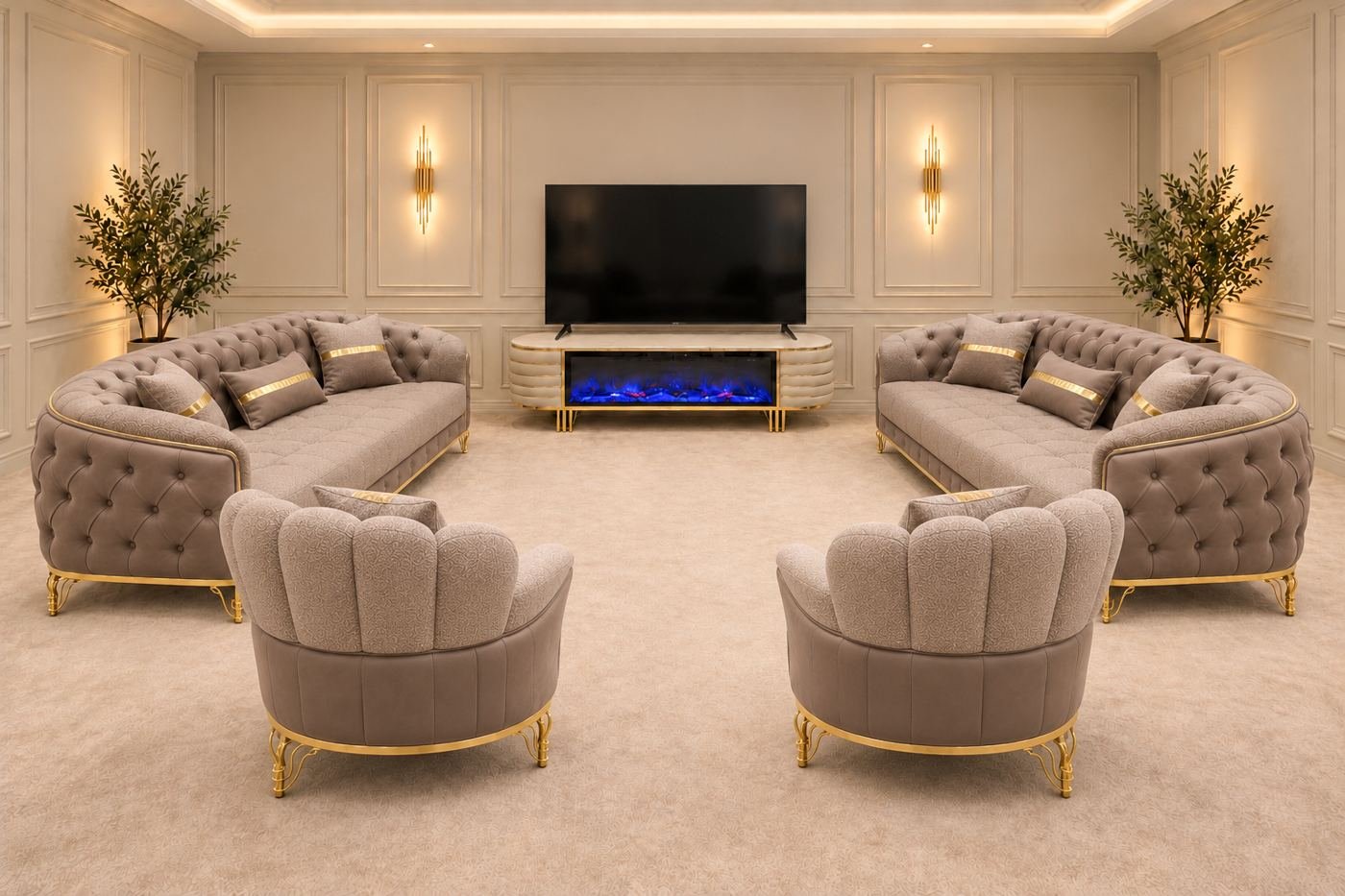
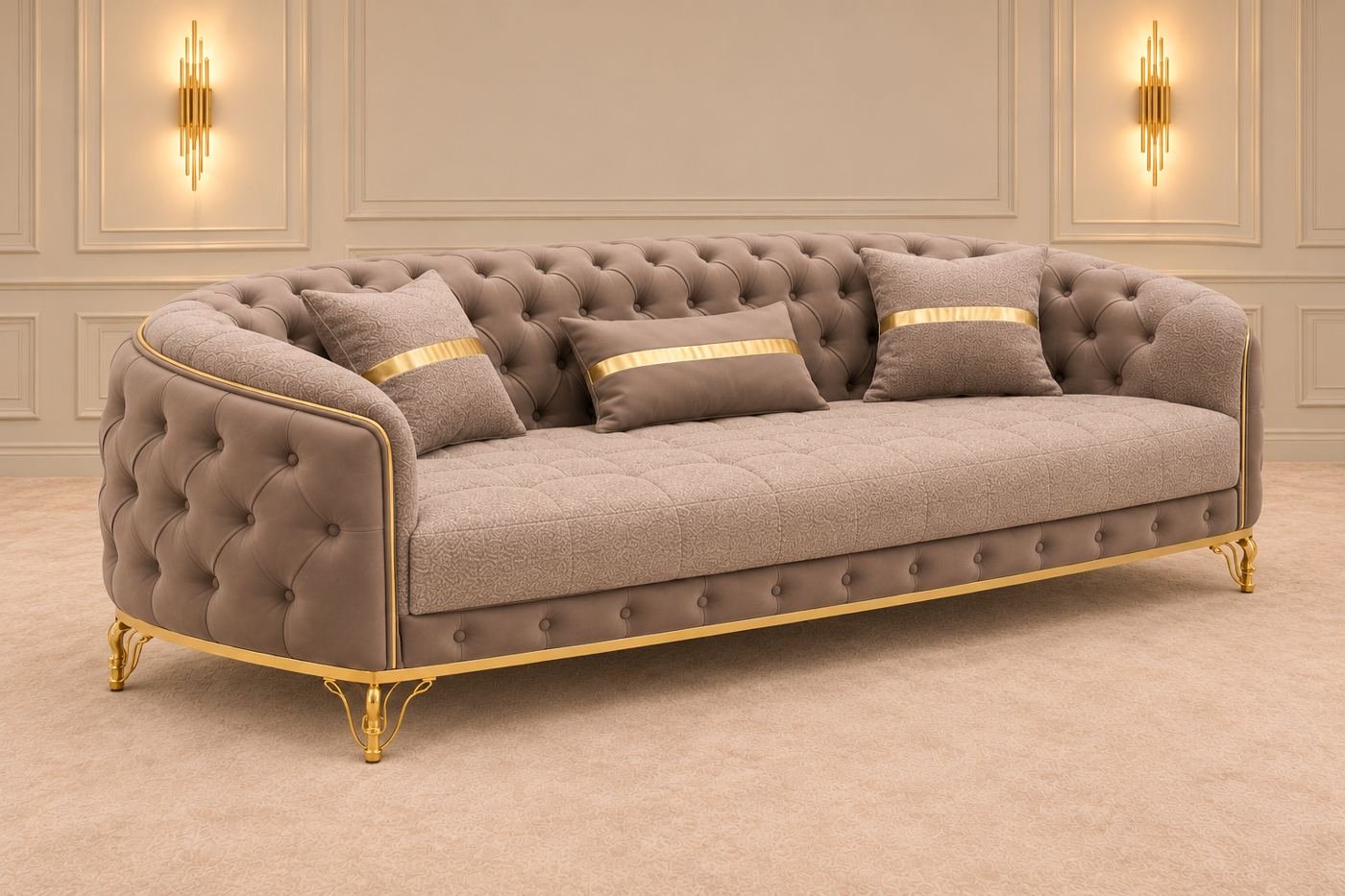
The fabric is what you see and touch every day. Turkish upholstery often uses velvet and velvet-look fabrics, textured weaves such as bouclé, and decorative details such as deep button tufting, channel stitching and gold trim. Our taupe set combines a velvet-look tufted outer with a soft bouclé-style seat.
- Ask for the rub test result (Martindale or Wyzenbeek): a higher number means the fabric resists wear better.
- Check the seams: straight, even and finished, with no loose threads.
- Check the tufting: even spacing, with buttons fixed firmly.
- Ask about care: most upholstery needs weekly vacuuming and quick blotting of spills.
How is an upholstered bed made?
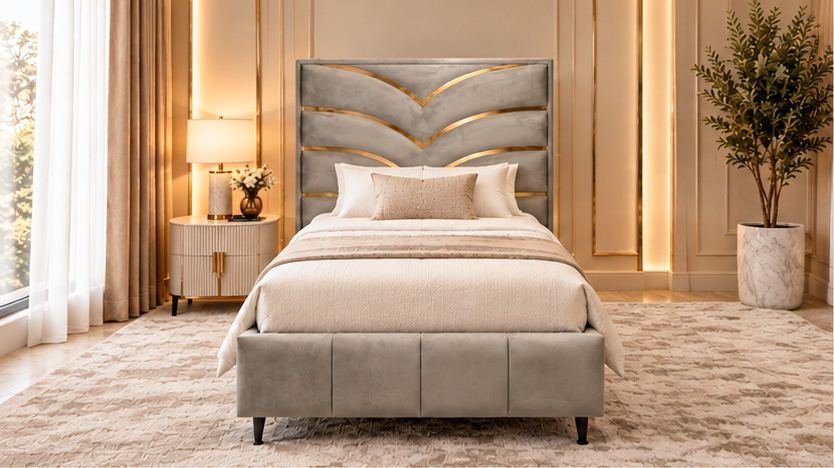
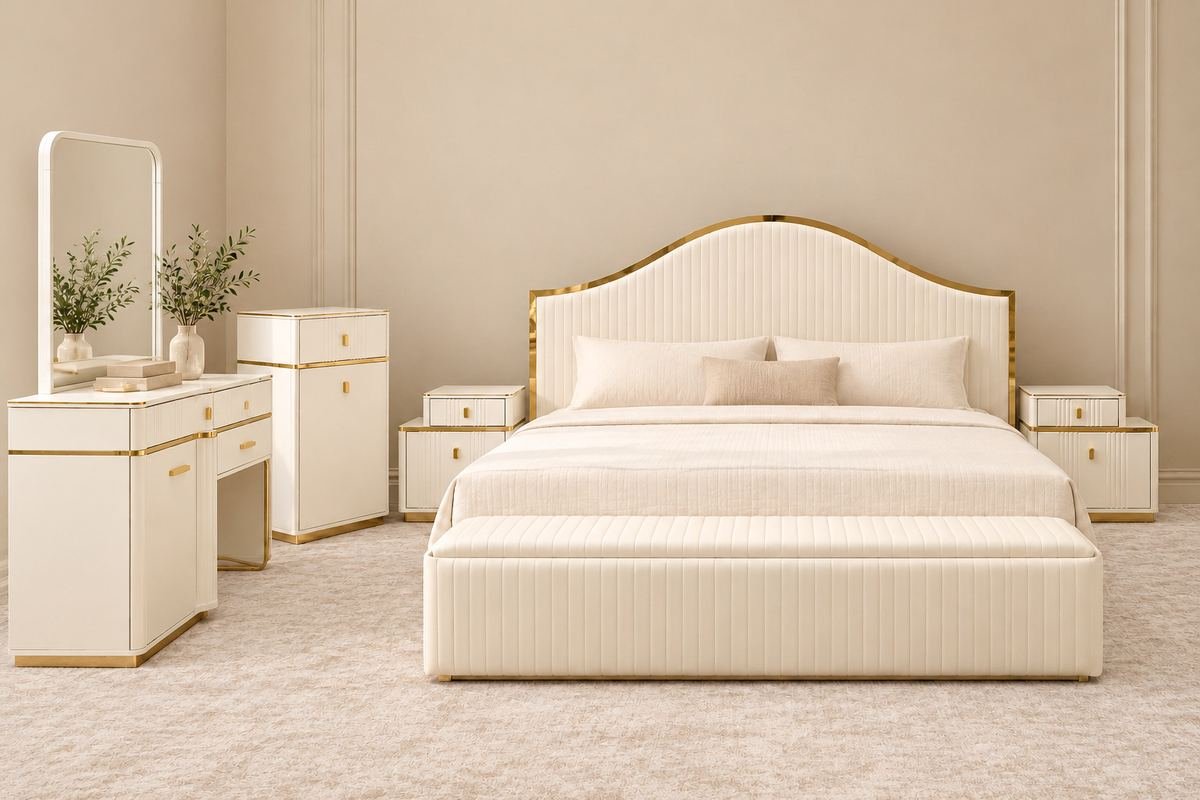
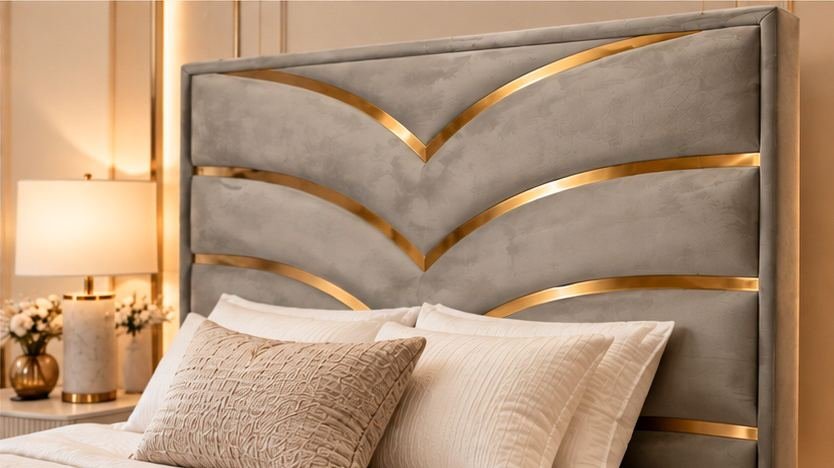
An upholstered Turkish bed follows the same idea as a sofa. The frame and side rails carry the weight, a platform or slats support the mattress, and the headboard is a frame with foam padding and fabric on top, often with tufting or channels. Many Turkish beds, including all of ours, add a storage base under the mattress, which our guide to storage bed pros and cons explains.
And the mattress?
A mattress has a support core of springs or foam, comfort layers of softer foam or fibre on top, and a cover. The core decides support; the comfort layers decide how it feels. Our Turkish mattresses are 30 cm thick and come in 90 x 200, 120 x 200 and 180 x 200 cm. Lie on them in our showroom for 10 to 15 minutes before you choose.
Shop the look

What should you ask before you buy?
- What is the frame made of, and how are the joints fixed?
- What holds up the seat: springs or webbing?
- What foam is in the seat, and what is its density?
- What is the fabric, and what is its rub test result?
- What does the warranty cover, and for how long?
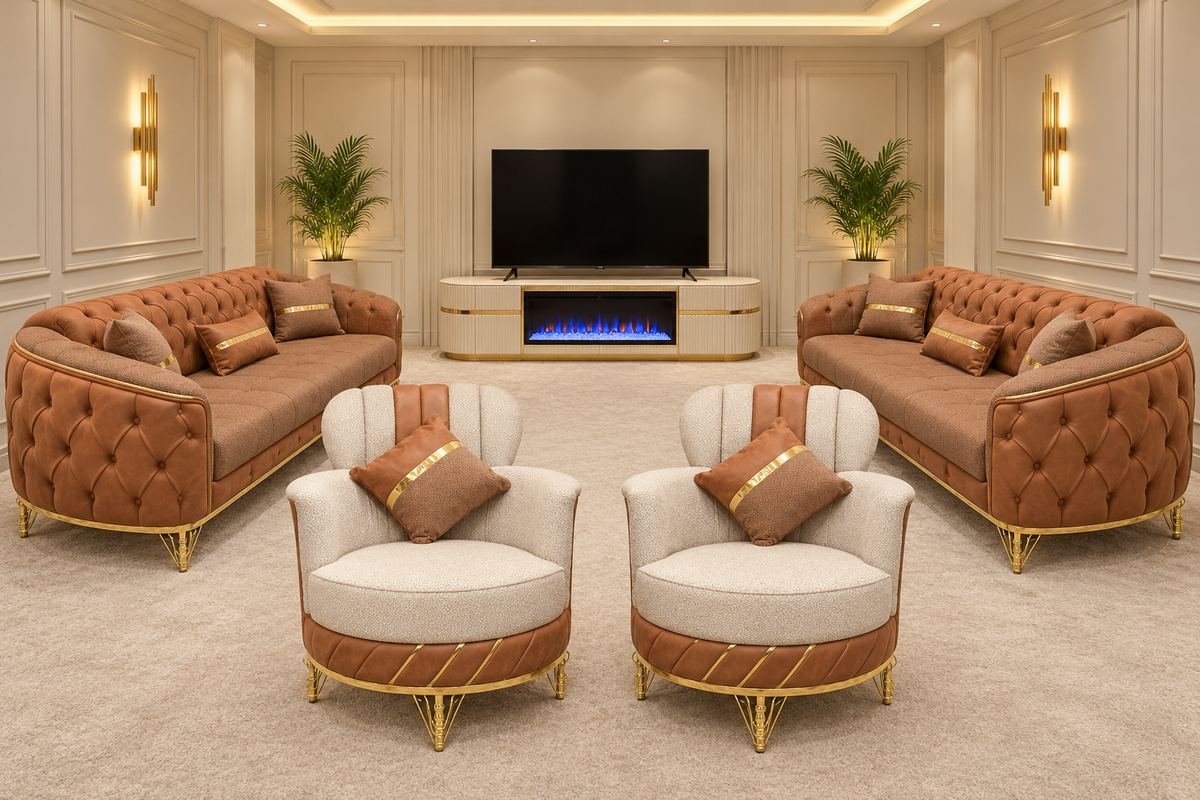
We do not list frame and foam specifications on our website, so ask our team about any piece, such as our Taupe Turkish Sofa Set or our Brown Turkish Queen Bed with Storage. Our warranty covers manufacturing defects in the frame, mechanisms and stitching. For the checks to do in person, read our honest guide to Turkish furniture quality, our sofa set buying guide and our comparison of Turkish furniture vs flat-pack. Our care and aftercare service helps after delivery.
See how it is made in Hamilton
Lift the corners, sit on the seats, open the storage and feel the fabrics at Home Centre Green, 110 Lancing Dr, Unit 2, Hamilton, ON L8W 3A1, with free parking outside.
We are open Monday to Friday 9:00 am – 6:00 pm and Saturday 10:00 am – 5:00 pm. We are closed on Sundays. Call or WhatsApp us on (905) 253-0202, or send us a message.
Frequently asked questions
What is inside a sofa?
A sofa has four main layers: a frame of wood, plywood, engineered board or metal; a suspension of springs or elastic webbing; foam and fibre padding for the seat, back and arms; and the fabric cover. The frame and the seat foam decide most of how long it lasts.
What foam density is good for a sofa seat?
Higher density foam generally keeps its shape longer. As a rough guide, seat foam of about 35 kg/m³ (2.2 lb/ft³) or more is considered high density, while lighter foam is common in backs and budget seats. Density is not firmness: a dense foam can feel soft. Ask for the exact figure.
What is high-resilience foam?
High-resilience (HR) foam is a type of polyurethane foam that springs back quickly when you stand up and resists forming dips. It is usually denser than standard foam and is often used in better sofa seats. Ask the store whether the seat cushions use HR foam.
Where is Turkish furniture made?
Türkiye has large furniture-making centres, such as İnegöl in Bursa province and Kayseri, as well as makers across the country. Most of our collection at Home Centre Green is made in Türkiye and imported to our Hamilton showroom, and every piece is checked before it joins our range.

Home Centre Green Design Team
The team behind our Hamilton showroom. We help customers choose Turkish-made sofas, beds and carpets every day, and we write these guides to answer the questions we hear most in store.