
Kids Bed Safety Checklist: Bunk Beds, Mattresses and Tip-Overs
Health Canada advises that children under 6 should not sleep on a top bunk, that guardrails stand at least 12.7 cm above the mattress, and that dressers be anchored to the wall. Use this checklist before your child moves into a new bed.

Key takeaways
- No child under 6 on a top bunk, and only one person on the top bunk at a time.
- Top-bunk guardrails on all four sides, with their tops at least 12.7 cm (5 in) above the mattress.
- The mattress must fit the frame snugly, with no gaps a child can slip into.
- Keep beds away from windows, blind cords, lamps and plugs.
- Anchor dressers, bookcases and TVs to the wall to stop tip-overs.
What makes a kids bed safe?
A safe kids bed has a mattress that fits the frame snugly, sits away from windows, blind cords, lamps and plugs, and shares the room with furniture anchored to the wall. For bunk beds, Health Canada advises that no child under 6 uses the top bunk and that its guardrails stand at least 12.7 cm (5 in) above the mattress. This checklist brings together that advice; always follow the instructions that come with your bed too.
Which bed suits which age?
| Age | Bed | Key point |
|---|---|---|
| Under 2 | Crib | No portable bed rails for children under 2 |
| Up to about 5 | Toddler bed | Toddler beds should be low to the ground |
| Under 6 | Single bed or bottom bunk only | Never the top bunk |
| 6 and older | Single, 120 cm bed or top bunk | One person on the top bunk at a time |
Sources: Health Canada, Is your child safe? Sleep time and Bunk beds.
The kids bed safety checklist
The bed and mattress
- The mattress fits snugly in the frame, with no gap at the sides or ends where a child could slip or get trapped.
- The mattress is the size the frame was made for. A European 90 x 200 cm frame needs a 90 x 200 cm mattress, not a North American twin; our twin vs single guide explains the difference.
- The frame is solid: check that bolts and slats are tight when you assemble it and every few months after.
- No large gaps in guardrails or headboards; Health Canada says openings in a toddler bed's guardrails should be under 8.4 cm (3.3 in).
- No loose parts or sharp edges, and no strings or ribbons on the bed.
Bunk beds
- Children under 6 stay off the top bunk.
- Guardrails on all four sides of the top bunk, with their tops at least 12.7 cm (5 in) above the mattress.
- Corner posts no more than 5 mm above the guardrails, so clothing cannot catch.
- The correct mattress size and thickness for the top bunk, so the guardrails stay high enough.
- Only one person on the top bunk, and no jumping or playing on it.
- Away from ceiling fans, windows and cords.
- Certified to the safety standard ASTM F1427, as Health Canada advises when buying.
Source: Health Canada, Bunk beds. We do not sell bunk beds; this list is for parents choosing one anywhere.
Where the bed goes
- Away from windows, so a child cannot climb from the bed to the window.
- Blind and curtain cords tied up high and out of reach, or cordless blinds.
- Away from lamps, heaters and plugs, with no cords running along or under the bed.
- A soft rug beside the bed for the first weeks in a big bed.
- A night light so the route to the door and bathroom is clear.
Furniture and tip-overs
- Anchor dressers, bookcases and tall units to a wall stud with anti-tip devices.
- Heavier items in the lower drawers, and drawer locks so open drawers cannot become steps.
- No tempting items such as toys or a remote on top of a dresser or TV unit.
- Mount the TV on the wall, or attach it to both the stand and the wall.
Source: Health Canada, Furniture, appliance and television tip-overs.
Storage beds and kids
A storage bed is a great way to clear the floor, which removes trip hazards. Keep the storage base for an adult to open, store toys a child uses every day in low open bins instead, and teach children that the space under the bed is not for playing or hiding in. Our storage bed guide covers the pros and cons.
Shop the look


Our beds for kids and teens
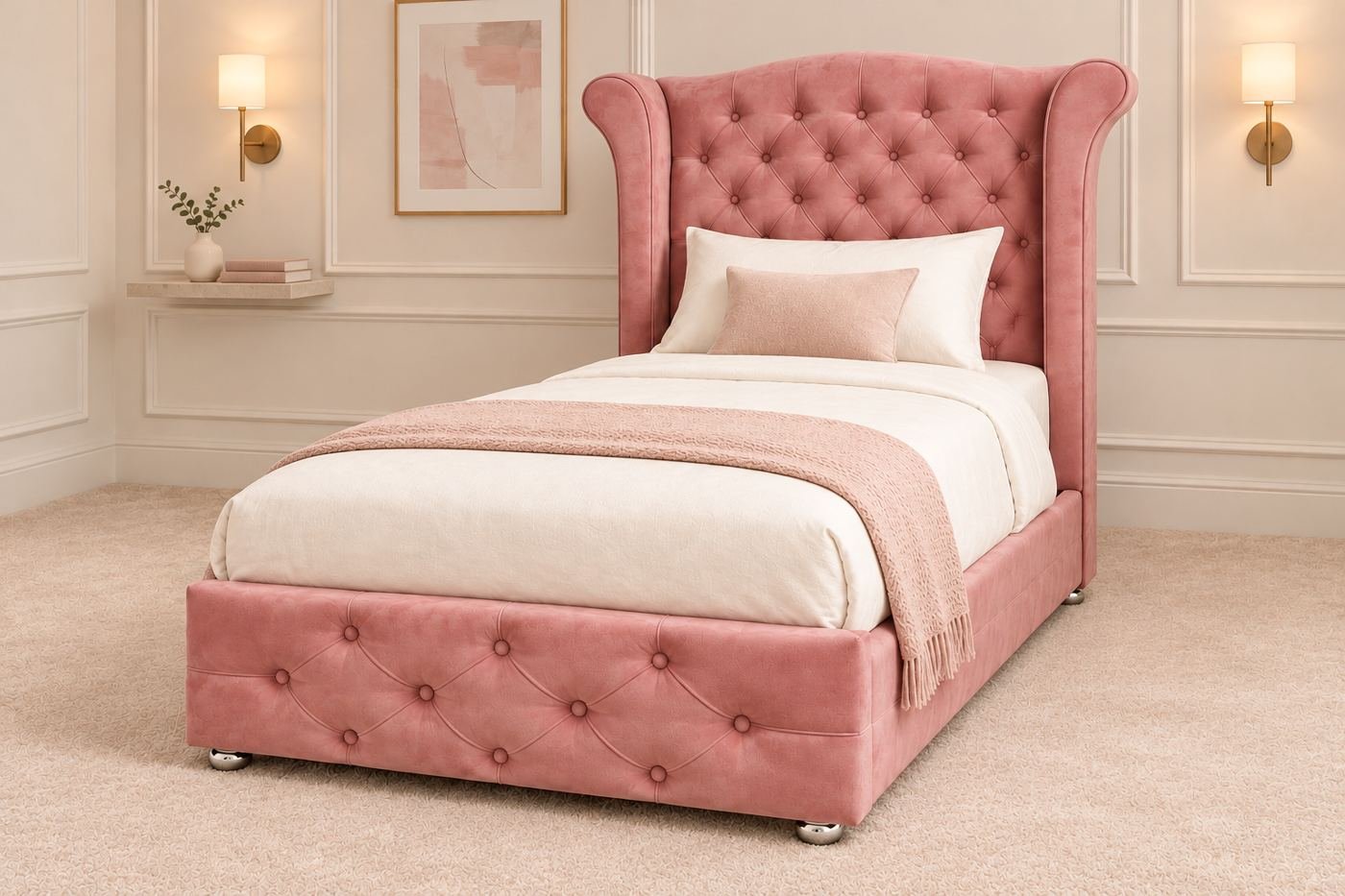
For children old enough for a regular bed, our single beds take a 90 x 200 cm mattress: the grey single storage bed and the cream wingback single. For older kids and teens who want more room, the pink and royal blue beds take a 120 x 200 cm mattress. Our 90 x 200 cm and 120 x 200 cm mattresses are made for these frames, so they fit snugly. Each mattress is 30 cm thick, so with a very young child, think about the height of the sleeping surface and keep a soft rug beside the bed.
For colour and storage ideas, see our kids bedroom ideas and teen bedroom makeover.
See our kids beds in Hamilton
Check the fit and the finish for yourself at Home Centre Green, 110 Lancing Dr, Unit 2, Hamilton, ON L8W 3A1, with free parking outside.
We are open Monday to Friday 9:00 am – 6:00 pm and Saturday 10:00 am – 5:00 pm. We are closed on Sundays. Call or WhatsApp us on (905) 253-0202, or send us a message.
Frequently asked questions
At what age can a child sleep on a top bunk?
Health Canada advises that children under 6 years old should not sleep on or use the top bunk. Only one person should be on the top bunk at a time, and older children should be taught to use the ladder and never to jump or play on the top bunk.
How high should bunk bed guardrails be?
Health Canada says the top bunk should have guardrails on all four sides, and the top of each guardrail should be at least 12.7 cm (5 in) above the top of the mattress. Corner posts should not stick up more than 5 mm above the guardrails, so clothing cannot catch on them.
When should a child move from a toddler bed to a regular bed?
Health Canada notes that toddler beds are designed for children up to about 5 years old and should be low to the ground. When your child moves to a regular single bed, choose a mattress that fits the frame snugly, keep the bed away from windows and cords, and add a soft rug beside it.
Are portable bed rails safe for toddlers?
Health Canada advises against using portable bed rails for children under 2 years old. For older children, use a rail made for the bed and mattress you have, fit it exactly as the instructions say, and check that it leaves no gap between the rail and the mattress.
How do I stop furniture tipping over on my child?
Anchor dressers, bookcases and tall units to a wall stud with anti-tip devices, put heavier items in the lower drawers, and add drawer locks so children cannot climb open drawers. Mount the TV on the wall, or attach it to both the stand and the wall, as Health Canada recommends.

Home Centre Green Design Team
The team behind our Hamilton showroom. We help customers choose Turkish-made sofas, beds and carpets every day, and we write these guides to answer the questions we hear most in store.