
Rug Size Guide: How to Choose the Right Area Rug Size for Every Room
Choose a rug big enough for the front legs of every sofa and chair to sit on it, with about 30 to 45 cm of bare floor left at the walls. Under a bed, it should show 45 to 60 cm on each side; under a table, 60 to 75 cm past the edge.

Key takeaways
- Go bigger than you think. A rug that is too small is a common sizing mistake; it makes furniture look like it is floating.
- Living room: at least the front legs of every sofa and chair should sit on the rug.
- Leave 30–45 cm (12–18 in) of bare floor between the rug and the walls.
- Bedroom: let the rug show about 45–60 cm (18–24 in) on each side of the bed.
- Dining room: the rug should reach 60–75 cm (24–30 in) past the table so chairs stay on it when pulled out.
- Measure in both systems. Canadian rugs are sold in feet, European and Turkish rugs in centimetres; compare the real numbers.
How do you choose the right rug size?
Start from the furniture, not the floor: the rug should be large enough to connect the pieces that belong together, such as a sofa and chairs, a bed, or a table and chairs, while leaving a border of bare floor at the walls. In almost every room, the right rug is bigger than people first expect.
Three rules cover most rooms:
- Living room: at least the front legs of every sofa and armchair sit on the rug.
- Bedroom: the rug shows about 45–60 cm (18–24 in) on each side of the bed.
- Dining room: the rug reaches 60–75 cm (24–30 in) past the table on every side.
In every room, leave about 30–45 cm (12–18 in) of bare floor between the rug and the walls. A small "frame" of floor is what makes a rug look intentional.
A note on words: in Canada, "carpet" usually means wall-to-wall carpeting, so most people search for an area rug. Our Turkish rugs are listed as carpets on our site, but they are loose area rugs you lay on the floor.
What are the standard rug sizes in cm and feet?
Canadian stores mostly sell rugs in feet, while European and Turkish rugs are made in centimetres, so the same "size" can be a different rug. Here are the common sizes in both systems.
| Canadian size (ft) | In cm | Closest European size (cm) | In feet |
|---|---|---|---|
| 5 x 8 ft | 152 x 244 | 160 x 230 | 5'3" x 7'7" |
| 6 x 9 ft | 183 x 274 | 200 x 290 | 6'7" x 9'6" |
| 7 x 10 ft | 213 x 305 | 200 x 300 | 6'7" x 9'10" |
| 8 x 10 ft | 244 x 305 | 240 x 340 | 7'10" x 11'2" |
| 8 x 11 ft | 244 x 335 | 250 x 350 | 8'2" x 11'6" |
| 9 x 12 ft | 274 x 366 | 300 x 400 | 9'10" x 13'1" |
| 13 x 16 ft | 396 x 488 | 400 x 500 | 13'1" x 16'5" |
Sizes are rounded. Linked sizes are the three sizes we carry. If you are replacing a rug, measure the old one in centimetres and compare it with the new rug's real size, not its name.
What size rug fits my room size?
Take the room's length and width and subtract 60 to 90 cm from each, which leaves 30 to 45 cm of bare floor on every side. The result is the largest rug that fits; choose the closest size at or below it.
| Rug size | Smallest room (30 cm border) | Comfortable room (45 cm border) |
|---|---|---|
| 200 x 300 cm | 2.6 x 3.6 m (8'6" x 11'10") | 2.9 x 3.9 m (9'6" x 12'10") |
| 250 x 350 cm | 3.1 x 4.1 m (10'2" x 13'5") | 3.4 x 4.4 m (11'2" x 14'5") |
| 400 x 500 cm | 4.6 x 5.6 m (15'1" x 18'4") | 4.9 x 5.9 m (16'1" x 19'4") |
In an open-plan space, measure only the zone the rug belongs to, such as the seating area, rather than the whole room. The rug's job there is to mark where the living room ends and the dining or kitchen area begins.
What size rug do you need for a living room?
For a living room, choose a rug large enough for at least the front legs of the sofa and every armchair to sit on it. That one rule fixes most living rooms, because it ties the seating together into one group.
- All legs on: the most luxurious look, best for large rooms and full sofa sets. The rug runs under every piece.
- Front legs on: the most common and practical layout. The back legs stand on the floor, and the rug can be smaller.
- Only the coffee table on: avoid this unless the room is very small. The rug looks like a bath mat, and the seating feels scattered.
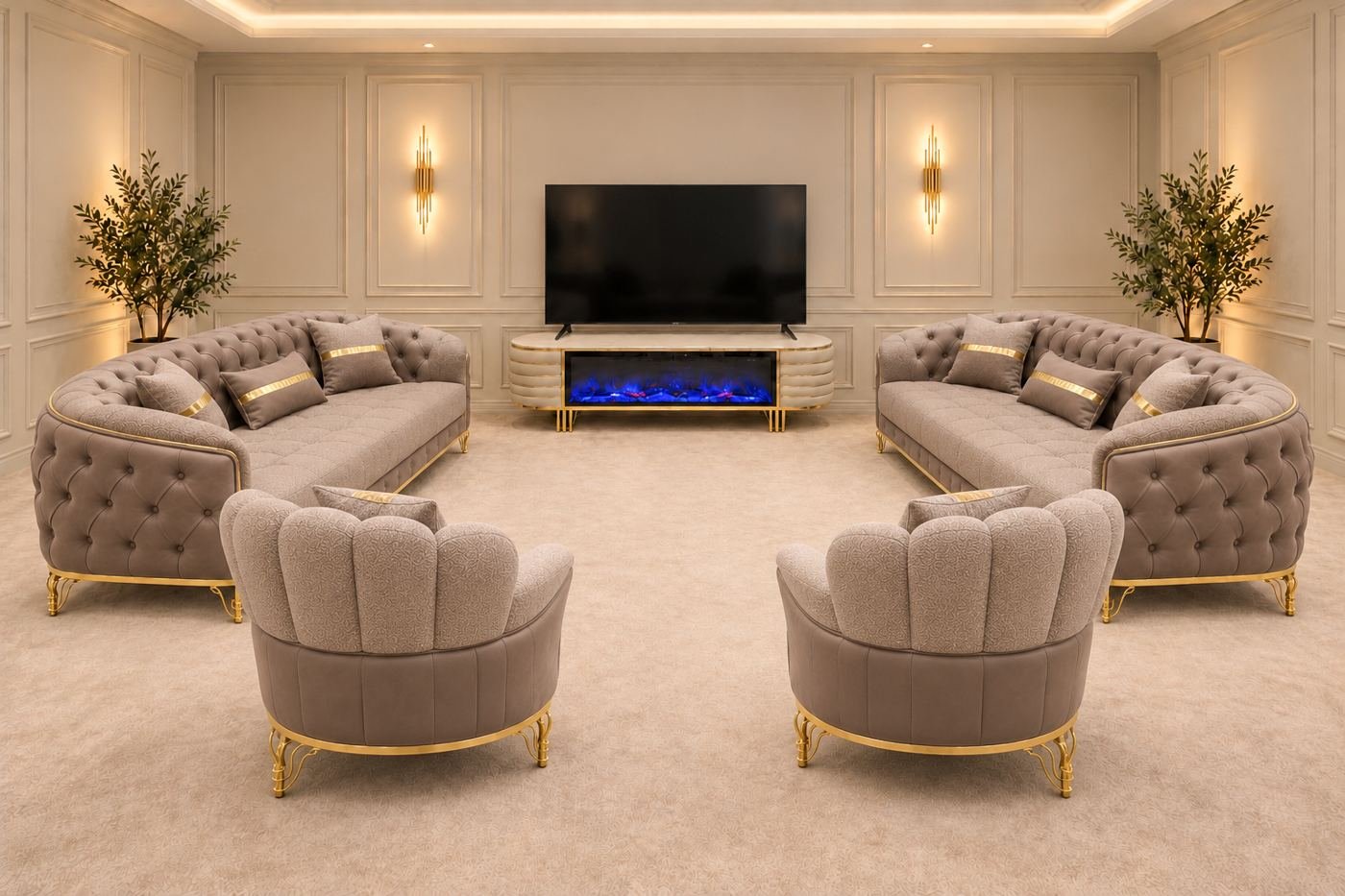
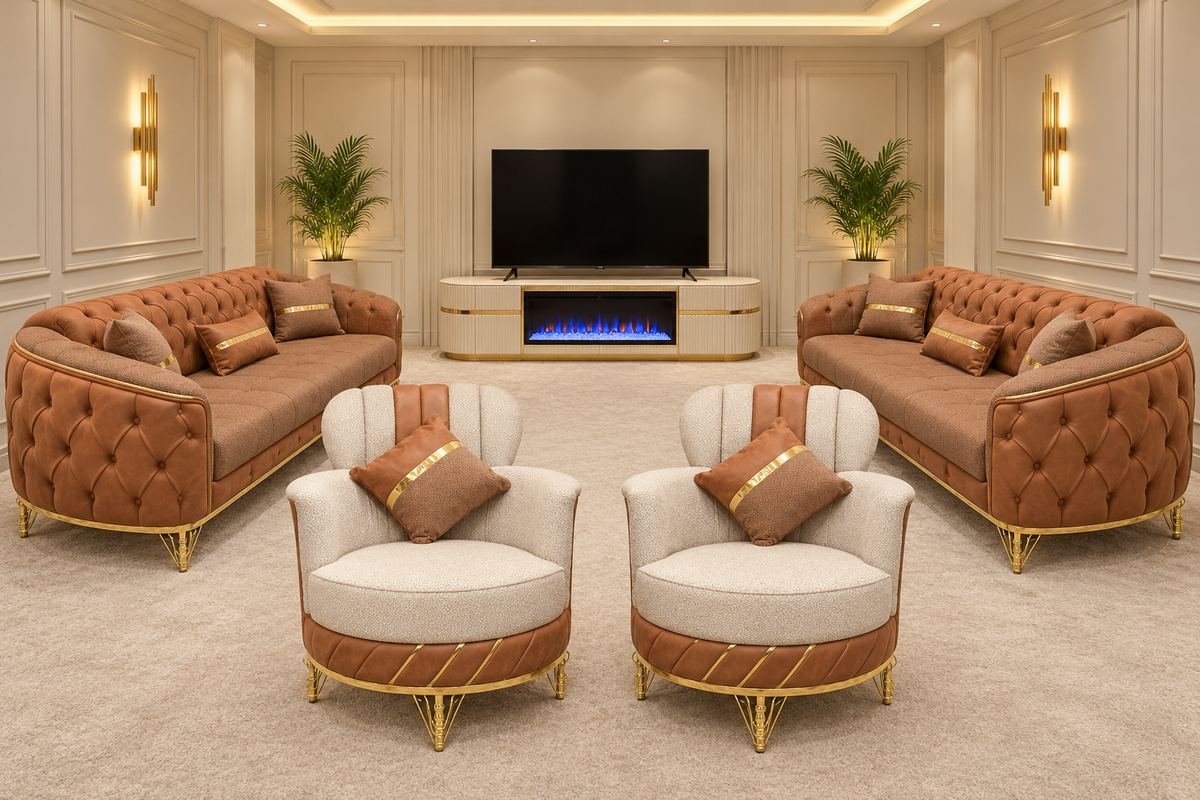
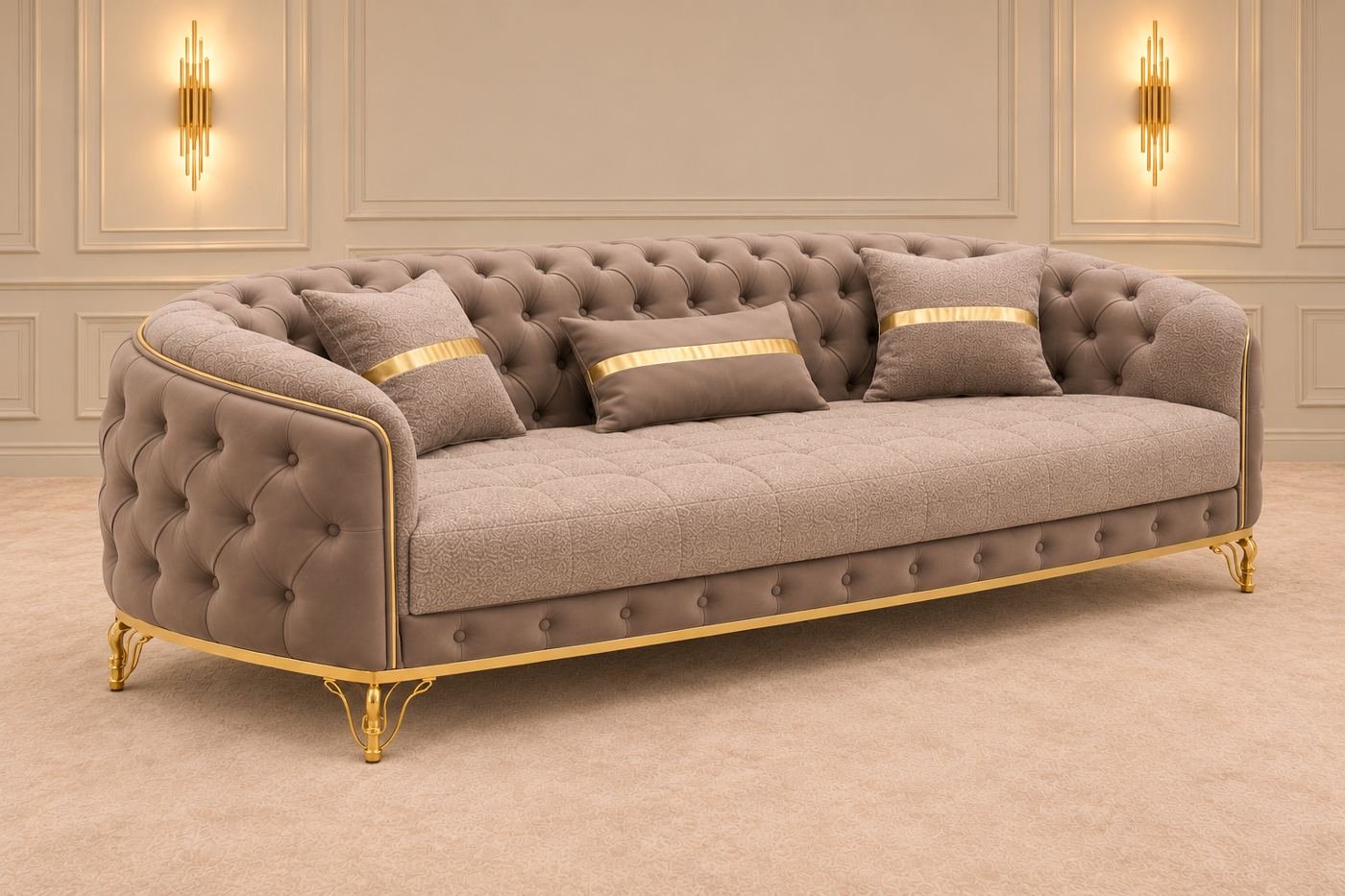
As a guide, a rug should also be wider than the sofa. Our taupe Turkish sofa is 220 cm long, so a 200 x 300 cm rug laid with its 300 cm side along the sofa leaves 40 cm at each end. For a full set with two sofas facing each other and two chairs, the 250 x 350 cm rug lets the front legs of every piece rest on it, and the 400 x 500 cm rug can sit under the whole group in a large or open-plan room.
| Seating | Layout | Rug size |
|---|---|---|
| One sofa and one chair | Front legs on | 200 x 300 cm (about 7 x 10 ft) |
| One sofa and two chairs | Front legs on | 200 x 300 cm or 250 x 350 cm |
| Two sofas facing, two chairs | Front legs on | 250 x 350 cm (about 8 x 11 ft) |
| Full sofa set, open plan | All legs on | 400 x 500 cm (about 13 x 16 ft) |
Leave about 45 cm (18 in) between the sofa and the coffee table. Our sofa set buying guide covers the rest of the living room measurements.
What size rug goes under a bed?
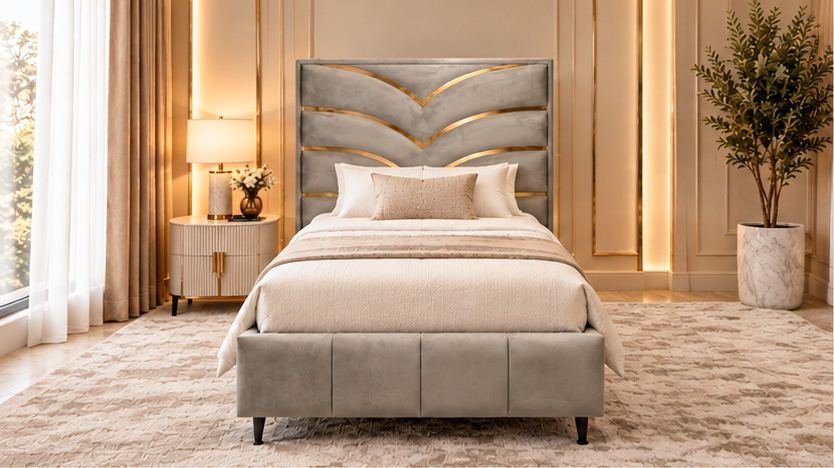
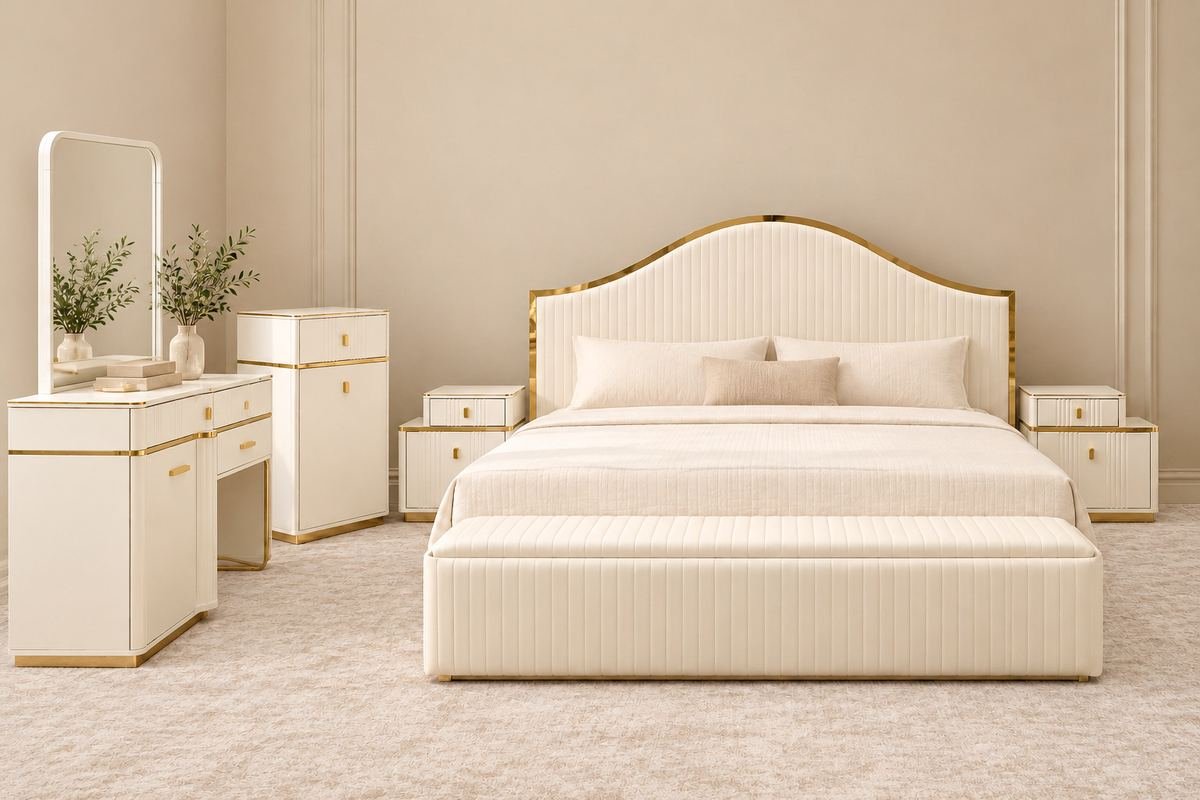
A bedroom rug should show about 45–60 cm (18–24 in) on each side of the bed, so your feet land on something soft when you get up. The usual layout is to place the rug under the lower two thirds of the bed, starting just in front of the nightstands.
The easiest way to get there with a European rug is to lay it crosswise, with its long side running across the bed. Here is how much rug each bed size leaves on each side, using standard Canadian mattress widths:
| Bed size | Mattress width | 200 x 300 cm rug | 250 x 350 cm rug |
|---|---|---|---|
| Twin | 99 cm | About 100 cm | About 125 cm |
| Double | 137 cm | About 81 cm | About 106 cm |
| Queen | 152 cm | About 74 cm | About 99 cm |
| King | 193 cm | About 53 cm | About 78 cm |
The frame is a little wider than the mattress, so the real border will be slightly smaller. For a queen or king, both of these rug sizes work well; for a twin, a 200 x 300 cm rug is generous. Our queen bed size guide explains how much floor space the bed itself needs.
How big should a dining room rug be?
A dining rug should reach 60–75 cm (24–30 in) past the table on every side, so the back legs of each chair stay on the rug when someone pulls it out to sit down. A rug that is too small catches chair legs on its edge every meal.
Use this formula: rug length = table length + 120 to 150 cm, and rug width = table width + 120 to 150 cm. For example:
| Table size | Minimum rug | Our rug that fits |
|---|---|---|
| Round, 100 cm | About 220 x 220 cm | 250 x 350 cm |
| Rectangular, 140 x 80 cm | About 260 x 200 cm | 200 x 300 cm, laid along the table |
| Rectangular, 180 x 90 cm | About 300 x 210 cm | 250 x 350 cm |
| Rectangular, 220 x 100 cm | About 340 x 220 cm | 250 x 350 cm, or 400 x 500 cm for a roomier look |
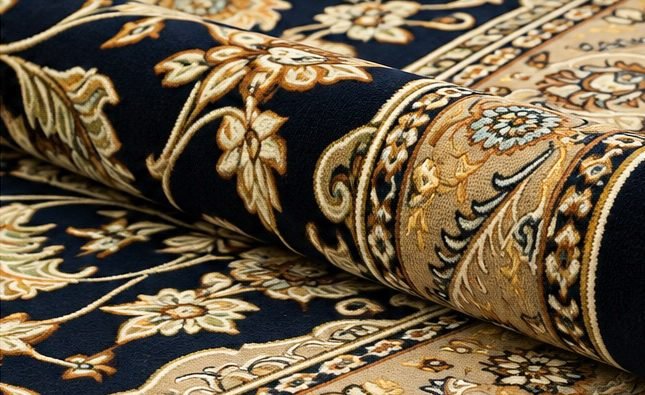
A low pile is the most practical choice under a dining table, because chairs slide over it without catching. All of our Turkish rugs have a 1 cm low pile.
What size rug works in a kids room, office or entryway?
Use the same idea everywhere: the rug should hold the furniture or the activity it belongs to, with a border of bare floor around it.
- Kids and teen rooms: a rug under the bed and the play or study area makes a soft landing and a warm floor on winter mornings. For a twin or 90 x 200 cm bed, a 200 x 300 cm rug laid crosswise covers the bedside and much of the floor.
- Home office: the rug should be large enough for the desk chair to stay on it when you push back, which usually means about 60–75 cm beyond the desk on the chair side. A low pile lets the chair roll easily.
- Entryway: choose a size that leaves the door free to swing and fits the space between the door and the stairs or hall. In a Canadian winter, an entryway rug also catches snow and salt, so keep it easy to clean.
- Under a sectional or corner sofa: the front legs of both sides should sit on the rug, so measure the inside of the "L" and add about 30 cm under each side.
In a room with no single focal point, centre the rug on the main piece of furniture, not on the room, and keep the same bare-floor border on the sides you can see.
Does pile height or a rug pad change the size you need?
Pile height does not change the size of the rug, but it changes where you can put it. A thick, high-pile rug can stop doors from opening and makes dining chairs hard to move, so it suits a bedroom or a quiet corner better than a busy room. A low pile, like the 1 cm pile on our Turkish rugs, works almost anywhere: doors swing over it, chairs slide on it, and it is easy to vacuum.
A rug pad sits under the rug and should be cut a few centimetres smaller than the rug on every side, so it never shows at the edges. It helps in three ways:
- It stops slipping on hardwood, laminate and tile floors.
- It protects the floor from scratches where the rug rubs against it.
- It adds a little cushioning under a low-pile rug.
Check that the rug and pad together still clear the bottom of every door in the room before you buy the pad.
What are the most common rug size mistakes?
Most rug problems come from choosing a size by eye instead of with a tape measure. Watch for these:
- Too small: the rug floats in the middle of the room, and the furniture around it looks disconnected.
- Too close to the walls: without a border of bare floor, a rug starts to look like wall-to-wall carpet.
- Off-centre: centre the rug on the seating group or the bed, not on the room, if the two are different.
- Blocking a door: check that every door can swing over the rug. A low pile helps.
- Mixing up cm and feet: a "200 x 300" European rug is about 7 x 10 ft, not 8 x 10 ft.
Which sizes do our Turkish rugs come in?
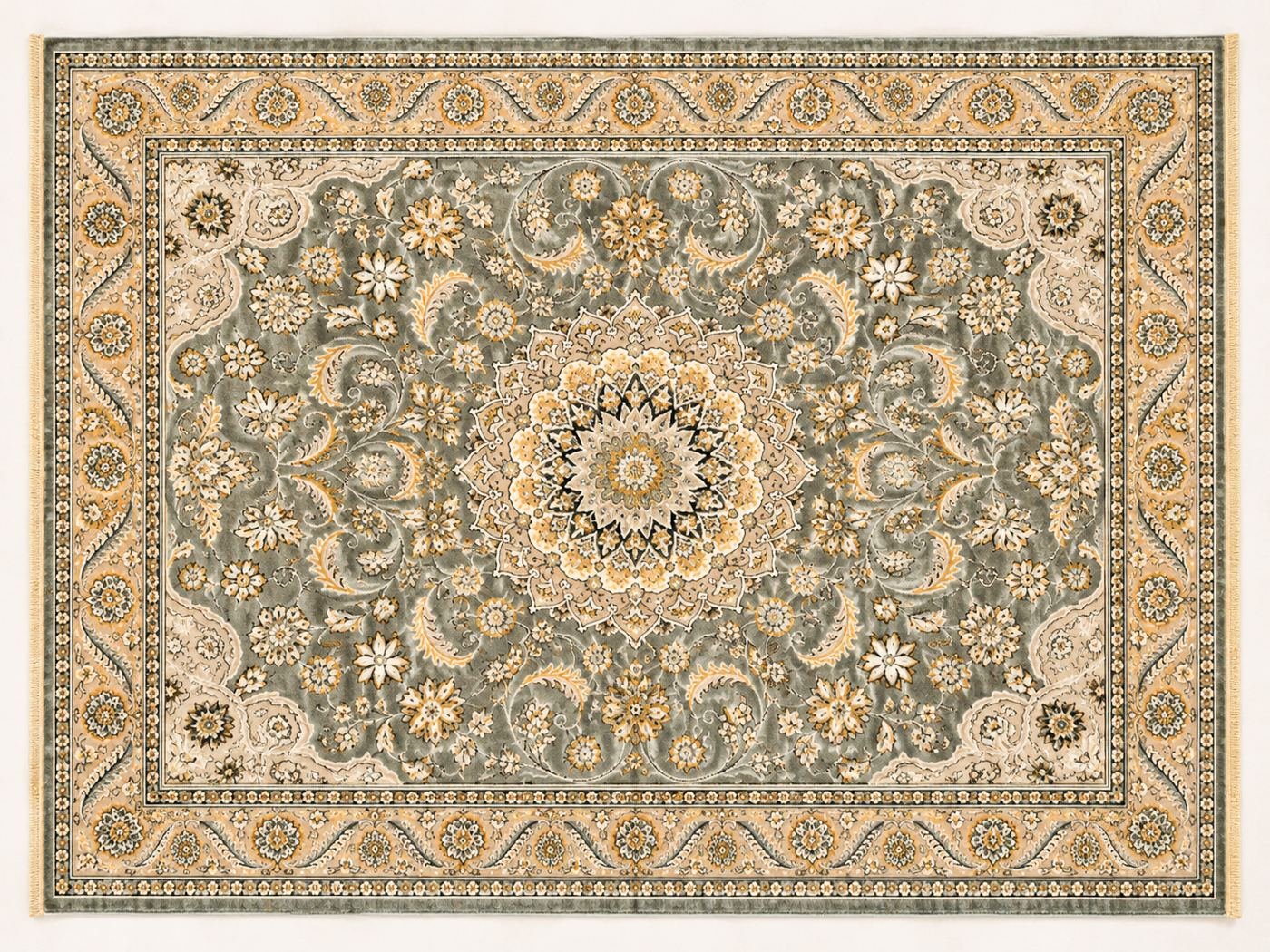
We carry embroidered Turkish rugs in three sizes, each in its own colour, all with a classic medallion design and a 1 cm low pile. Prices are in Canadian dollars, before HST.
| Rug | Size | Area | Best for | Price |
|---|---|---|---|---|
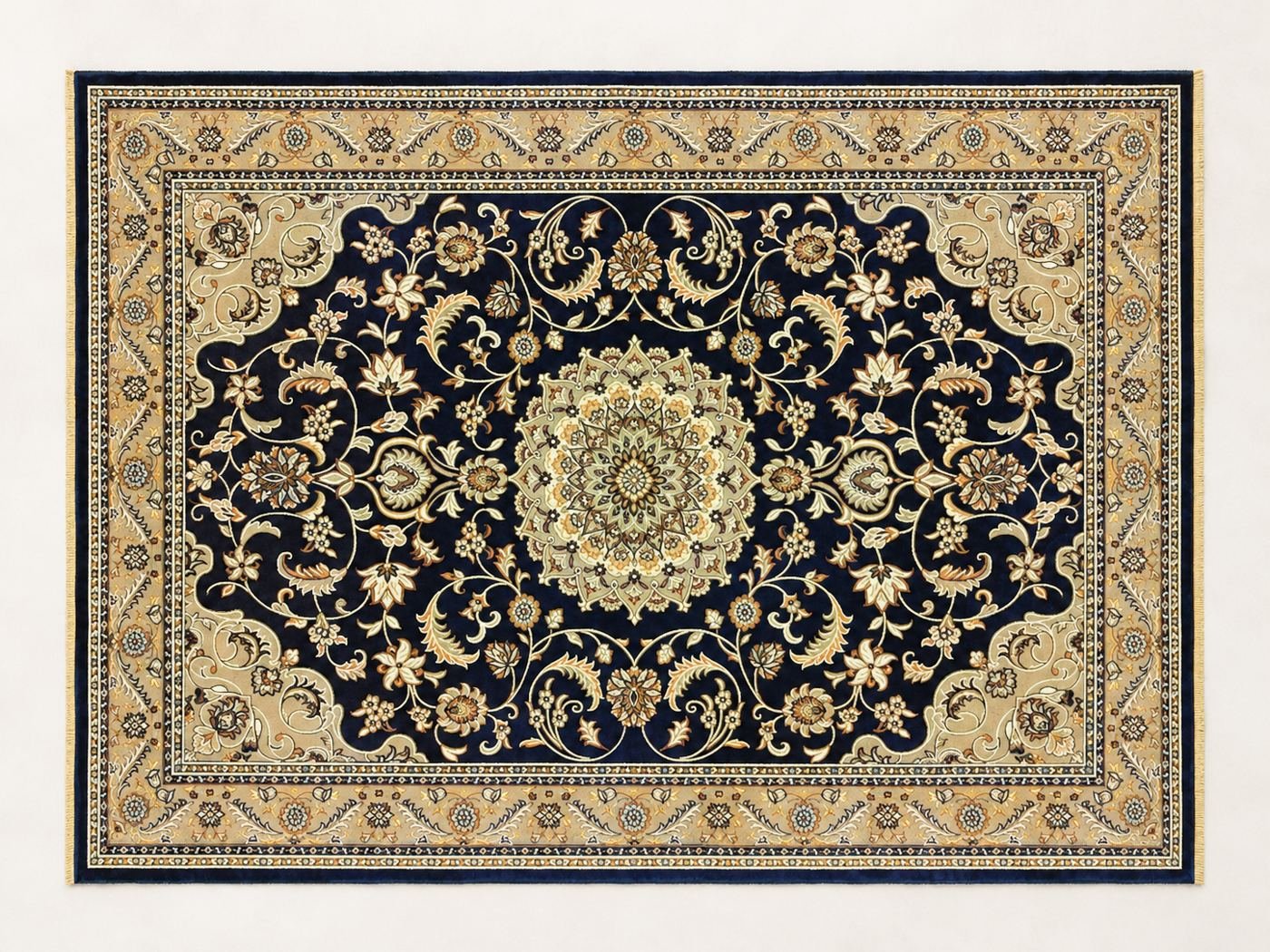
| Navy Turkish rug | 200 x 300 cm (6'7" x 9'10") | 6 m² (64.5 sq ft) | Medium living rooms, dining tables for six, queen bedrooms | $100 |
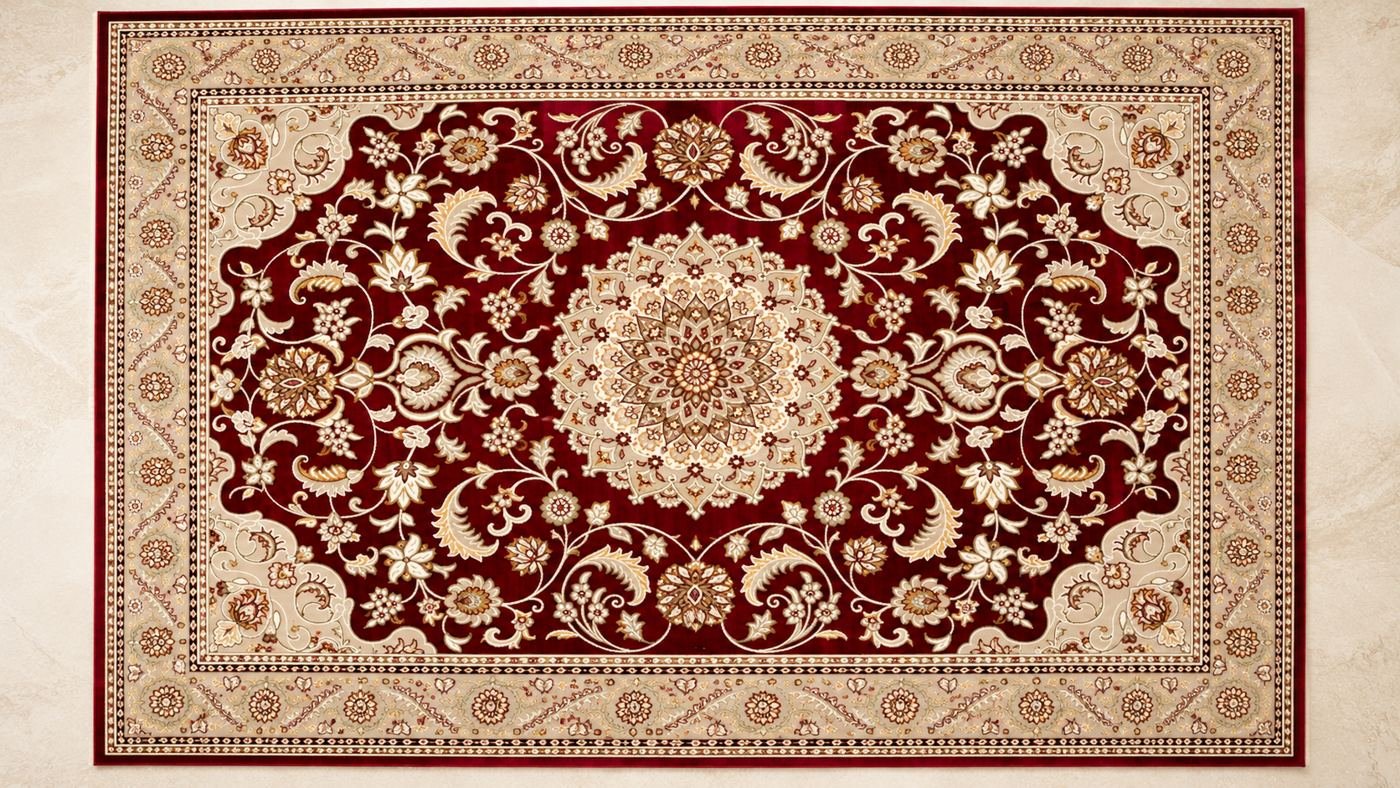
| Red Turkish rug | 250 x 350 cm (8'2" x 11'6") | 8.75 m² (94 sq ft) | Large living rooms, dining tables for eight, king bedrooms | $200 |
| Sage green Turkish rug | 400 x 500 cm (13'1" x 16'5") | 20 m² (215 sq ft) | Open-plan living rooms, great rooms, large dining rooms | $300 |
You can see all of our Turkish rugs online. If you are building a neutral room, our guide to a warm, neutral living room around one statement sofa shows how a patterned rug adds depth without adding a new colour.
Shop the look


See our rugs at our Hamilton showroom
A rug is easier to judge in person, next to the sofa or bed it will go with. At Home Centre Green, Hamilton, Ontario, our three rug sizes are in stock, and you can lay them beside our sofa sets and beds to see the scale. Bring your room measurements and a few photos, or book our Turkish carpet sizing service for help choosing.
Our own team delivers inside the City of Hamilton only, and pickup from the showroom is free. Delivery is free on orders of $1,000 or more; smaller orders pay a flat $49 per order, not per piece. See our delivery policy. We accept credit and debit cards, Apple Pay and Google Pay, and we do not offer payment plans or financing.
Visit us at 110 Lancing Dr, Unit 2, Hamilton, ON L8W 3A1, with free parking outside. We are open Monday to Friday 9:00 am – 6:00 pm and Saturday 10:00 am – 5:00 pm. We are closed on Sundays. You can also call or WhatsApp us on (905) 253-0202 or send us your room size.
Rug size checklist
- I measured the room, or the zone the rug belongs to, in centimetres.
- The rug leaves about 30–45 cm of bare floor at the walls.
- In the living room, the front legs of every seat sit on the rug.
- Under the bed, the rug shows about 45–60 cm on each side.
- Under the table, the rug reaches 60–75 cm past every edge.
- Every door can swing over the rug.
- I compared the real size in cm or feet, not the name.
Frequently asked questions
What size rug do I need for my living room?
Choose a rug large enough for at least the front legs of the sofa and every armchair to sit on it, and leave about 30 to 45 cm (12 to 18 in) of bare floor at the walls. In many living rooms that means a 200 x 300 cm (about 7 x 10 ft) rug or larger; a full sofa set usually needs 250 x 350 cm or more.
What size rug goes under a queen bed?
A rug for a queen bed should show about 45 to 60 cm (18 to 24 in) on each side. A queen mattress is 152 cm wide, so a 200 x 300 cm rug laid crosswise, with its 300 cm length running across the bed, shows about 74 cm on each side. A 250 x 350 cm rug gives an even more generous border.
How big should a dining room rug be?
Add 60 to 75 cm (24 to 30 in) on every side of the table, so the chairs stay on the rug when someone pulls them out to sit down. For example, a 180 x 90 cm table needs a rug of at least about 300 x 210 cm, so a 250 x 350 cm rug works well.
Is it better for a rug to be too big or too small?
Too big is usually better. A rug that is too small makes the furniture look like it is floating and the room look smaller. As long as you can leave about 30 cm (12 in) of bare floor at the walls, a larger rug will make the room look more pulled together.
What is 200 x 300 cm in feet?
A 200 x 300 cm rug is about 6 ft 7 in x 9 ft 10 in. It is close to the 7 x 10 ft rugs sold in some Canadian stores, and a little smaller than the more common 8 x 10 ft size (244 x 305 cm). It suits most medium living rooms, dining tables for six and queen bedrooms.
What sizes are your Turkish rugs?
Our embroidered Turkish rugs come in three sizes, each in its own colour: navy in 200 x 300 cm ($100 CAD), red in 250 x 350 cm ($200) and sage green in 400 x 500 cm ($300). All three have a 1 cm low pile and are in stock at our Hamilton showroom.

Home Centre Green Design Team
The team behind our Hamilton showroom. We help customers choose Turkish-made sofas, beds and carpets every day, and we write these guides to answer the questions we hear most in store.