
Turkish Rugs Guide: Types, Patterns and How to Choose One
Turkish rugs range from hand-knotted pile rugs and flat-woven kilims to modern machine-made designs. Look at the back, the fringe and the price to tell them apart, then choose by size, pattern, colour and how busy the room is.

Key takeaways
- Three main types: hand-knotted pile rugs, flat-woven kilims and modern machine-made rugs.
- Hand-knotted rugs show the pattern clearly on the back, with small irregularities.
- Classic patterns include the central medallion, floral borders and geometric motifs.
- Choose the size first, then the colour, then a pattern busy or calm enough for the room.
- A low pile is practical for busy homes, dining rooms and pets.
What should you know before buying a Turkish rug?
"Turkish rug" covers three quite different things: hand-knotted pile rugs, flat-woven kilims and modern machine-made rugs in Turkish designs. They differ hugely in how they are made, how they feel and what they cost. Work out which type you are looking at, then choose by size, colour and pattern for your room, and by how much care you want to give it.
What makes a rug Turkish?
Rug weaving in Anatolia, the region that is now Turkey, goes back many centuries, and Turkish rugs were prized across Europe long before they reached North American homes. Traditional Turkish rugs are known for the symmetrical "Turkish knot", bold colours such as red, navy and gold, and designs passed down through towns and regions; names like Uşak (Oushak) and Hereke are still used for particular styles today. Modern Turkish rugs often borrow these classic patterns but are made in new ways and colours.
What are the main types of Turkish rug?
| Type | How it is made | Feel | Price and care |
|---|---|---|---|
| Hand-knotted | Each knot tied by hand onto a loom | Dense pile; slight irregularities | The most expensive; professional cleaning |
| Kilim (flat-weave) | Pattern woven into the threads; no pile | Thin, light, often reversible | Mid-range; needs a non-slip pad |
| Machine-made | Made on power looms in standard sizes | Even pile; often low and smooth | The most affordable; easy to vacuum |
How do you tell them apart?
- Turn it over: on a hand-knotted rug the pattern shows clearly on the back, with tiny knots and small irregularities. A very even back, or a glued or fabric backing, usually means machine-made or tufted.
- Check the fringe: on a hand-knotted rug it is usually the ends of the threads running through the rug. A fringe sewn on as a separate strip points to a machine-made rug.
- Look at the pattern: hand-made rugs often show small changes in colour or shape; machine-made ones are perfectly repeated.
- Look at the price: a large, new, hand-knotted rug takes months of work, so a very low price for one is a warning sign.
- Ask for the details: a good seller tells you how the rug was made and what it is made of.
What are the classic Turkish rug patterns?
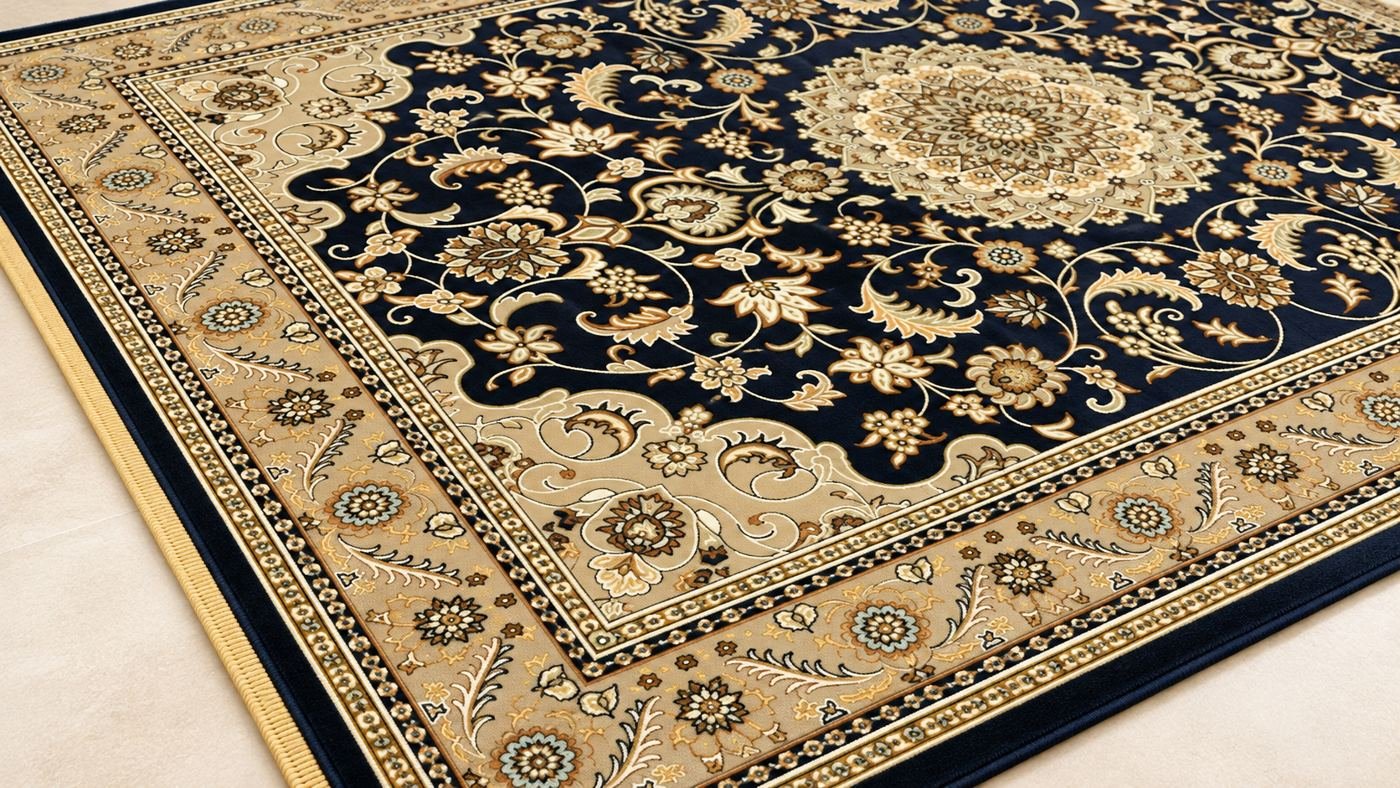
- Central medallion: a large motif in the middle, framed by corner pieces and a border. It suits a room where the rug sits in the centre, under a coffee table or a bed.
- Floral borders: layers of vines and flowers around the edge, which frame the rug like a picture.
- Geometric motifs: bold diamonds, hooks and stars, common in village rugs and kilims.
- All-over patterns: a repeating design with no centre, which works well under a dining table or in an open plan.
- Prayer-rug layouts: an arch shape at one end, usually found on smaller rugs.
How do you choose the right Turkish rug?
- Size first: in a living room, at least the front legs of the sofa and chairs should sit on the rug. Our rug size guide and rug placement guide show how to measure.
- Then colour: pick one colour from the rug to repeat in cushions or art. Our rug colour guide explains the options.
- Then pattern: with a busy rug, keep the sofa and walls plain; with a patterned sofa, choose a calmer rug.
- Think about traffic: a low pile is easier to vacuum and lets chairs and doors move over it, which suits dining rooms, hallways, kids and pets.
- Add a non-slip pad, especially on hard floors and under thin rugs.
How do you care for a Turkish rug?
Vacuum it weekly with the beater bar off, blot spills straight away with cold water and a little mild soap, avoid bleach and strong chemicals, rotate it every few months and keep it out of strong direct sun. Leave hand-knotted and antique rugs to a professional cleaner. Our rug cleaning guide covers stains step by step.
Shop the look

Our Turkish rugs
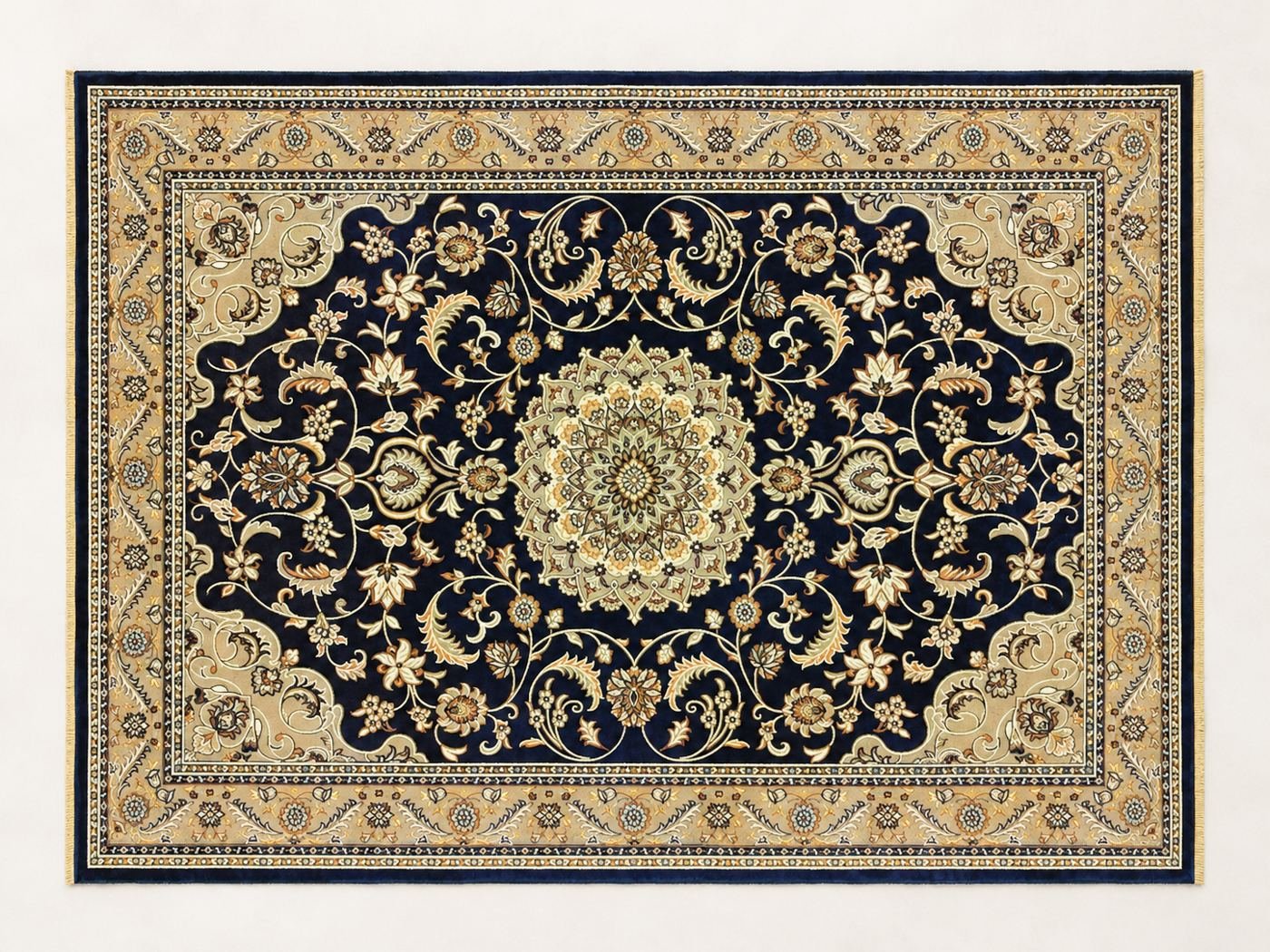
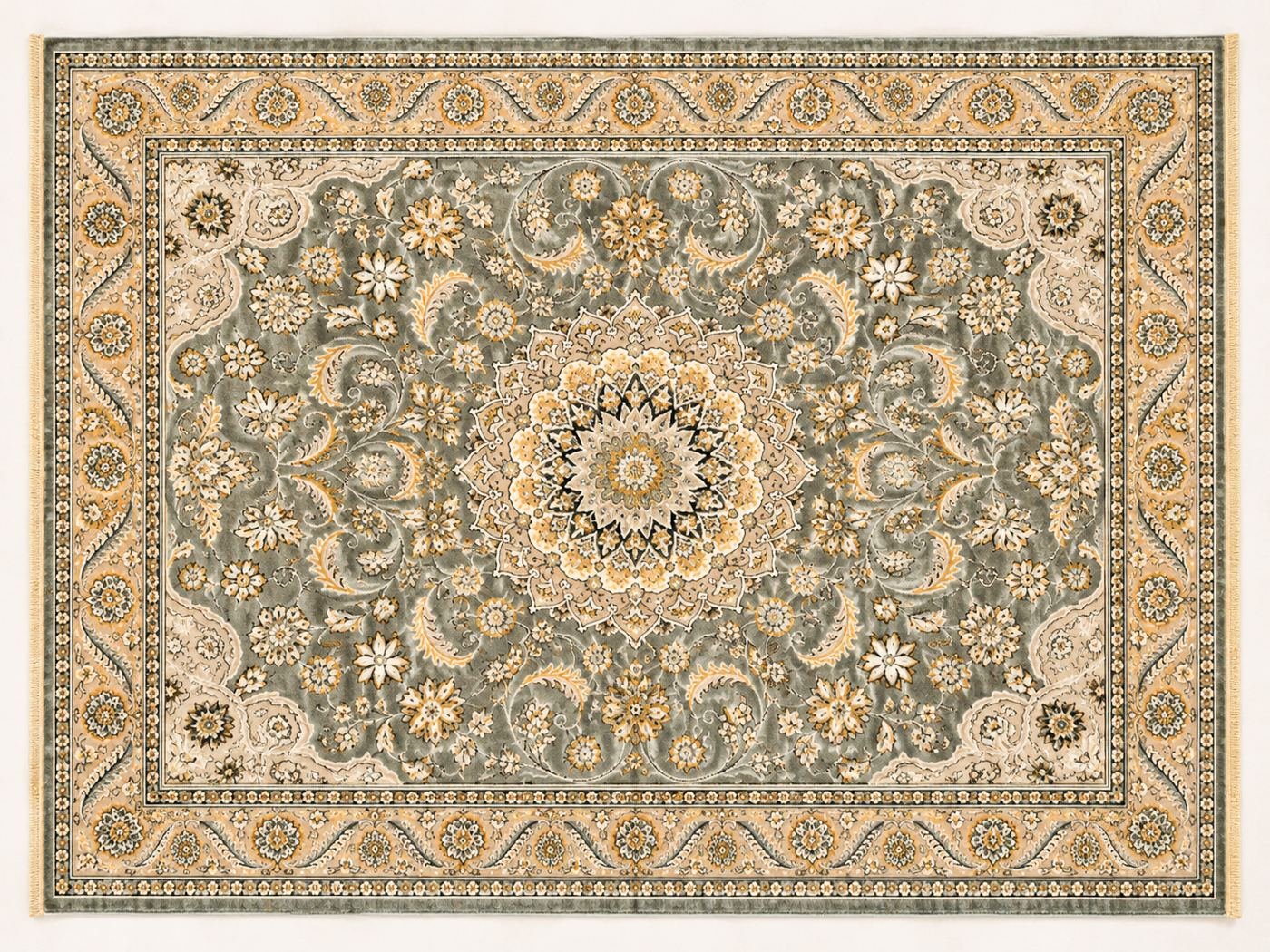
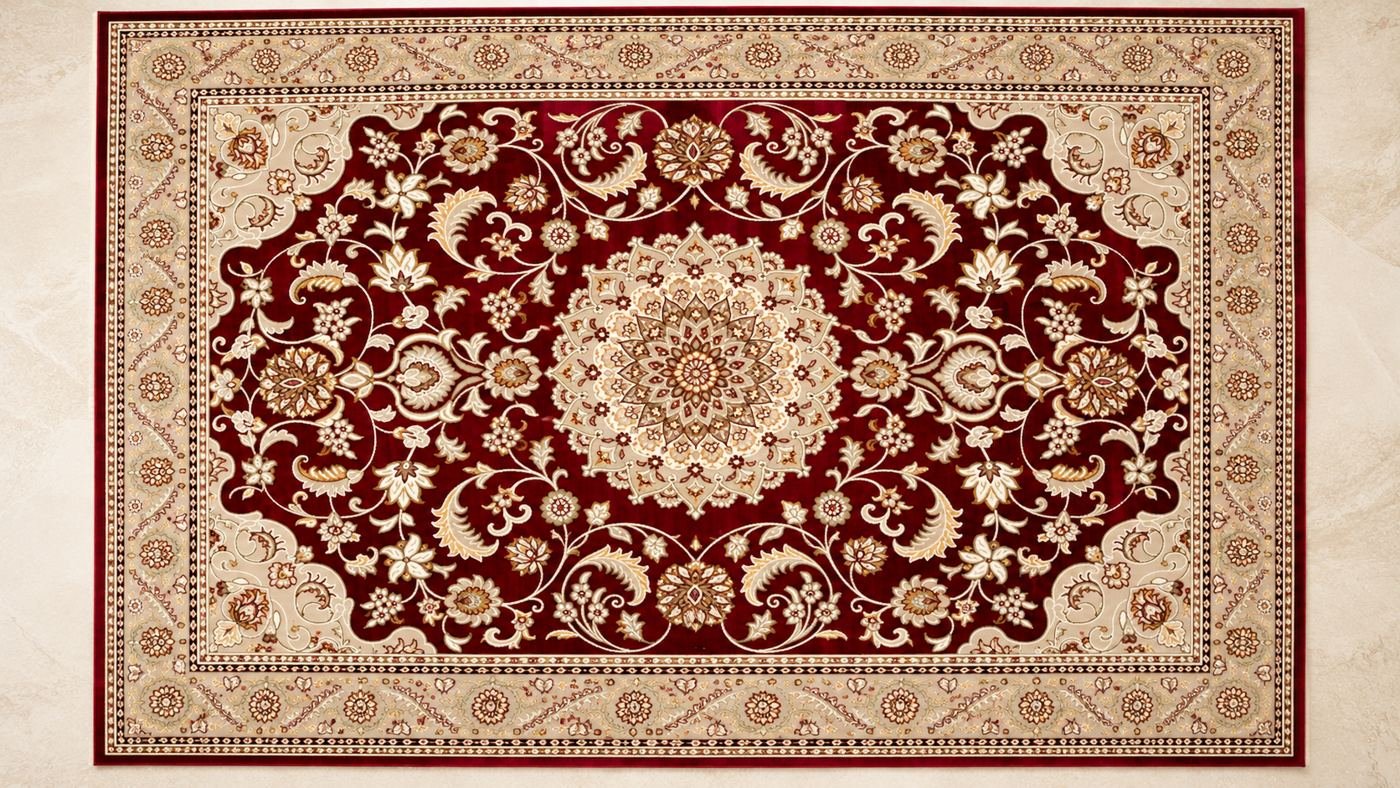
Our rugs are modern embroidered Turkish designs with a central medallion and a floral border, and a 1 cm low pile that is easy to vacuum. They are decorative, everyday rugs rather than hand-knotted heirlooms, and they come in three sizes and colours:
| Rug | Size | Price | Suits |
|---|---|---|---|
| Navy medallion | 200 x 300 cm (about 6'7" x 9'10") | $100 | Smaller living rooms, under a queen bed |
| Red medallion | 250 x 350 cm (about 8'2" x 11'6") | $200 | Large living rooms, dining rooms for six to eight |
| Sage medallion | 400 x 500 cm (about 13'1" x 16'5") | $300 | Large open-plan rooms and whole seating groups |
Not sure which size? Our carpet sizing service can help, and our area rugs in Hamilton page shows the collection. Curious about the rest of our range? Read is Turkish furniture good quality? or browse all our rugs.
See our Turkish rugs in Hamilton
See the colours and feel the pile at Home Centre Green, 110 Lancing Dr, Unit 2, Hamilton, ON L8W 3A1, with free parking outside. Bring your room measurements and a photo of your sofa.
We are open Monday to Friday 9:00 am – 6:00 pm and Saturday 10:00 am – 5:00 pm. We are closed on Sundays. Call or WhatsApp us on (905) 253-0202, or send us a message.
Frequently asked questions
What is a Turkish rug?
A Turkish rug is a rug made in Turkey or in the Anatolian weaving tradition. The term covers hand-knotted pile rugs, flat-woven kilims and modern machine-made rugs. Classic designs include a central medallion, floral borders and bold geometric motifs, often in red, navy, cream and gold.
How can I tell if a rug is hand-knotted?
Turn it over. On a hand-knotted rug the pattern shows clearly on the back, with small knots and slight irregularities. The fringe is usually the ends of the threads that run through the rug, not a strip sewn on. A very even back, a glued backing or a sewn-on fringe usually means it was made by machine.
What is the difference between a kilim and a rug?
A kilim is flat-woven, with no pile: the pattern is woven straight into the threads, so it is thin, light and often reversible. A pile rug has tufts or knots that stand up from the base, which makes it softer and thicker underfoot. Kilims suit layering and low-traffic spots; pile rugs feel warmer.
Are machine-made Turkish rugs any good?
They can be a practical choice. A machine-made rug costs far less than a hand-knotted one, comes in standard sizes, and many have a low pile that is easy to vacuum. They are decorative rugs rather than heirlooms, so judge them on the design, size, feel and how easy they are to care for.
What colour Turkish rug should I choose?
Pick one colour from the rug to repeat in the room. Red rugs add warmth to grey, cream or white furniture; navy feels calm and hides marks; sage green suits light woods and plants. With a busy pattern, keep the sofa and walls plain so the rug stays the focal point.

Home Centre Green Design Team
The team behind our Hamilton showroom. We help customers choose Turkish-made sofas, beds and carpets every day, and we write these guides to answer the questions we hear most in store.